Japan
Packages
- Wabunka - a Japanese cultural experience
Sleeping places
- Hoshino Resorts
- NIPPONIA - historic Japanese inn stays
- Wooden Homes - Wooden houses with service and it is available in many places in Japan
Food
Sushi
-
to eat
- to pick a piece of sushi with hands, pick up on the sides but not on both ends
- to pick a piece of sushi with chopsticks, the chopsticks should be parallel to rice and chopsticks do not touch the topping if possible
- brush soy sauce with shoga (pickled ginger) onto the topping
- shoga (pickled ginger) can be eaten to remove the aftertaste of fat
- tea is drank to remove any aftertaste
-
to order
- it is okay to let chef to know what you dislike beforehand and it is okay to mention the budget as well
-
sushi types
- nigiri
- gunkanmaki (battleship roll)
- nori-maki (most of common form appear in supermarket)
- te-maki (hand roll)
-
order types
- omakase (chef’s choice)
- okonomi (your choice)
- okimari (set menu)
Ramen
Drink
Tea ceremony
The tea bowl has a 正面 (しょうめん) and often it is the beautiful side. It is side that the host presents the bowl to the guests. To honor the craftmanship, guest should avoid drinking from 正面 and, thus, rotate the bowl clockwise. Upon finishing drinking, the bowl should be rotated anti-clockwise until 正面 is facing the host. The bowl should be returned to the host in that way. Rotating the tea bowl is a gesture of respect and mindfulness.
茶の湯 (ちゃのゆ) connects to mindfulness through its Zen Buddishism. The ceremony emphazises being fully present and appreciating the moment, fostering traquility and introspection. Japnese has a concenpt of 一期一会 (いちごいちえ) where it emphasises the uniqueness and irreplaceable nature of each moment, encouraging individuals to be fully present and appreciative of their current experiences.
Making matcha
Tools
茶筅(ちゃせん)さえあれば気軽(きがる)に楽しんでいただけます。おもてなしに最適 です。
Steps
- Put matcha (about 2g, or one and a half bamboo teaspoons) in a tea bowl a. 茶わんにお抹茶を入れます。(茶杓で軽く1杯半・…・約2g)
- Pour hot water into tea bowl (about 60cc) a. 茶わんに3分の1くらいのお湯(ゆ) (80℃ ~90℃℃) を注(そそ)ぎます。(約60cc)
- Stir with tea whisk a. 茶せんでよくかき混(ま)ぜます。 Mの字を描(か)くように点(た)てると上手に点(た)てやすいです。
Making gyokuro
Characteristics
苦(にが)みの成分(せいぶん)「タンニン」の量が少なく、甘み・旨味(うまみ)の成分の 「テアニン」が豊富(ほうふ)に含(ふく)まれております。
Steps
- Pour hot water (80ml) into a small tea cup and let the hot water cool down a. 熱湯(ねっとう)を急須(きゅうす)に入れ、急須が十分熱くなったら、人数分の 茶わん八分目程に注(そそ)ぎ分け、もう少し冷(さ)まします。
- Put tea leaves into teapot (2 tablespoons or 8g) a. お茶の葉を急須に入れます。(約8gで2人分)
- Pour the cooled water (40-50 degrees) from the small tea cup into a teapot a. 湯さましした茶わんのお湯(40℃~50℃)60cc を急須に入れます。
- Wait for about 90 seconds a. 1分半待ちます。2煎目以降は1分程待ちます。
- Pour all tea from the teapot (until the last drop is served) a. 濃(こ)さが均(きん)一になるように回(まわ)しつぎし、お茶は最後の一滴まで 出し切ります。
Making sencha
Characteristics
甘みと渋(しぶ)みを楽しむ最(もっと)も一般的な緑茶です
Steps
- Put tea leaves into a teapot (2 tablespoons or 5g) a. お茶の葉を急須に入れます。(約5g で2人分)
- Pour hot water (180cc, 75-80 degrees) from the teapot a. お湯は少し冷ましてから(75℃〜80℃) 180cc を急須に入れます。
- Wait for 20 seconds for the first cup; immediately for the second cup and after a. 20 秒程待ちます。2煎目以降(いこう)は待たずにすぐ茶わんに注ぎます。
- Pour all tea from the teapot (until the last drop is served) a. 濃さが均一になるように回しつぎし、お茶は最後の一滴まで出し切ります。
Shopping
Books
- ジュンク堂書店
- 日経 Nikkei - search
- 駿河屋 するがや one-stop shop for second-hand books
- Book-Off ブックオフ second-hand books
- 紀伊國屋書店 Kinokuniya
- Net Off ネットオフ second-hand books
- Tsutaya renting books; no renting (only buying) via online; rental period of 21 days
Cameras
Shoes
Clothes
- Brand Collect ブランドコレクト
- second hand
- mostly on luxury or higher end
- stores in Tokyo only
- Komehyo コメ兵
- second hand
- mostly on luxury or higher end
- RAGTAG
- second hand
- mostly on luxury clothes with focus on street brands
- 2nd Street
- cheap basics
- feel open to find anything that catches your eye
- “any” jacket
- “any” pair of sunglasses
- “any” bags
- “any” pants
- Mercari (an online shop) メルカリ
- seeking particular trendy outfits or something specific
- on the younger side
- allow to set notififcation based on search criteria
- sellers often message you a lot (both when you buy an item and when they ship it)
- you can try to haggle in the comments section
- rate and review each seller once the items are received; transaction would not be finished, otherwise
- UseLet ユーズレット
- part of TreFac
- cheaper than 2nd Street
- only in Tokyo, Saitama, and Kanagawa
- ZOZOUSED ゾゾウーズド
- good new arrivals 新着 (しんちゃく)
Second-hand
- Treasure Factory (TreFac) トリファク
- furniture
- appliances
- clothes
- outdoor gear
- interior goods
- hobby items
- kitchen tools
- electronics
- musical instruments
- booze
- TreFac Sports トレファクスポーツ
- TreFac Market トレファクマーケット
- whole set of large furniture
- TreFacStyle トレファクスタイル
Proxy services
Shipping
- ヤマト運輸
- find a service
- boxes and containers
- sending parcels overseas
- sample international waybill
- tracking
- when using a phone number of Hong Kong, the staff of ヤマト運輸 may double check but it should be fine
Entertainment
Football
Sports
- JTB Sports different sports events such as marathon, cycling, triathlon, etc.
- Panorama Ginza, Nagano | Hike Master Japan
Work
- Nikkei Office Pass - a membership to access to various co-working space
Weather
Earthquake
- 気象庁|地震情報
- 気象庁|津波
- tenki.jp
- 特務機関NERV
- Yahoo! 災害マップ
- Toyota 通れた道マップ
- Honda 通行実績情報マップ
- Rapid Earthquake Alerts - Japan - updates are not quick
- 南海トラフ巨大地震
- Japan Meteorological Agency (JMA) Seismic Intensity Scale (Shindo Scale,
震度階級)
- it is a measure of the intensity of shaking at a specific location
- instead of measuring the energy released by an earthquake such as Richter scale
- diagram
- Shindo (震度)
- 0
- not felt by people but detectable by instruments.
- 1
- slightly noticeable to some people who are quiet indoors
- 2
- noticeable to many quiet people indoors; may wake a few
- 3
- felt by most indoors; some walking people notice; many awake
- 4
- startles most; felt by nearly everyone walking; wakes up most
- 5弱
- for human, frightens many; they may grab onto stable objects
- for wooden houses, small cracks may appear in walls of low earthquake resistance houses
- for concrete buildings, no significant effect
- 5強
- for human, movement is difficult without support
- for wooden houses, walls may crack in low earthquake resistance houses
- for concrete buildings, cracks may form in walls, beams, and pillars of low earthquake resistance buildings
- 6弱
- for human, standing is difficult
- for wooden houses, for less resistant houses, walls crack more often; houses may lean or collapse; small cracks may form in walls of more resistant houses
- for concrete buildings, for less resistant buildings, cracks occur more often; X-shaped cracks may develop; cracks may appear in structural elements of more resistant buildings
- 6強
- for human, standing or moving is only possible by crawling; people may be thrown through the air
- for wooden houses, low earthquake resistance houses are likely to lean or collapse; larger cracks are possible in more resistant houses
- for concrete buildings, ground-level pillars may break; collapse is possible for less resistant structures; for more resistant structures, cracks become more widespread; walls may slip
- landsides are expected
- 7
- for human, standing or moving is only possible by crawling; people may be thrown through the air
- for wooden houses, less resistant houses are highly likely to collapse; for more resistant houses, cracks are more frequent and leaning may occur
- for concrete buildings, most or all buildings (even earthquake-resistant ones) suffer severe damage
- 0
- it is a measure of the intensity of shaking at a specific location
Tsunami
- communications
- 大津波警報 (major tsunami warning)
- 10m超 (expected above 10m)
- 10m (expected 5-10m)
- 5m (expected 3-5m)
- 津波警報 (tsunami warning)
- 3m (expected 1-3m)
- 津波注意報 (tsunami advisory)
- 1m (expected 0.2-1m)
- 大津波警報 (major tsunami warning)
Volcano
- NHK volcano harzard map - within Japan only
Data SIM cards (Moshi Moshi via Airalo)
| Days | Data (GB) | Price (USD) |
|---|---|---|
| 30 | 20 | 26 |
| 30 | 3 | 8.5 |
| 15 | 2 | 6.5 |
| 7 | 1 | 4.5 |
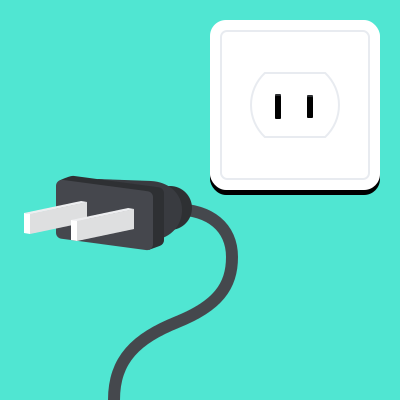
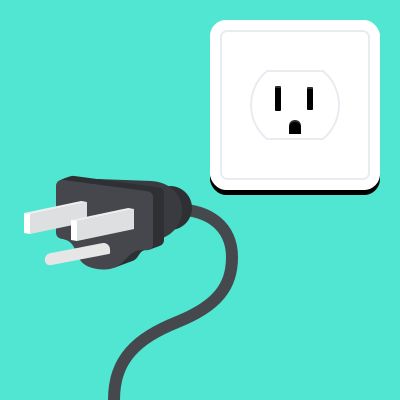
Electrical sockets
Transportation
- Car travel
- Traffic Rules
- Procedures related to Driver’s License
- 2 types of driving insurance available in Japan
- compulsory insurance (‘jibaisekihoken’)
- on its own may be insufficient in cases of personal liability
- voluntary insurance (‘nin’i no jidoshahoken’)
- compulsory insurance (‘jibaisekihoken’)
- Bicycle travel
- map of cycling
- everyone is mindful that spaces in pavements and roads shared with cyclists
- Docomo bike share service
- Hello Cycling
- by law, bicycles should stay on the left side of the road whenever possible
- to turn right, instead following car traffic, bicycles should cross the road straight ahead at a pedestrian crossing and then turn right (see this diagram from Unseen Japa
- by law, helmets while cycling are now required but it does not carry a penalty for non-compliance
- locks should be used although the theft rate is low
- Bus travel
Interesting facts
- Japan uses porous asphalt pavements, which not only reduce noise but also improve drainage and safety by reducing surface water during rain
Onsen
Yukata (浴衣)
- steps to put on
- make sure your yukata fits your height
- wrap the yukata around your body, starting with the right side, then left
- for women, wrap your obi (帯) around your waist; for men, wrap it around your hips; leave enough length to tie a bow
- you can wear the bow at the front, or twist it around to the back
Changing room
Take off all of your clothes in the changing room. No underware or swimsuits are allowed in the onsens. If you like, you can take a small hand towel into the bath area to cover yourself, but please do not let it touch bath water.
News
Radio
- NHK radio news channels - within Japan only
- NHK radio 易し言葉ニュース - within Japan only
- NHK radio AM player - within Japan only
Safty and security
- Japan travel advice from gov.uk
- Actions in case of missiles flying to Japan
- Tropical Cyclone Information
- Tsunami Warnings
- Safety tips for earthquake for tourists
- Dail
119for ambulance - Dail
119for fire - Dail
110for police - List of English-speaking sources of medical information in Japan
- 医療情報ネット(ナビイ)|全国の医療機関を検索|厚生労働省
Recycling
- Aluminum cans (アルミカン)
- ensure inside is washed and has nothing
- tray (トレイ)
- usually refers to plastic polystyrene tray (発泡スチロールトレイ)
- ensure it is washed (with no oil) and dried
- those carried cup noodles, natto (納豆), or mushroom (きのこ) should not be included
- those transparent (透明) or translucent (半透明) should not be included
- transparent tray (透明トレイ)
- ensure it is washed (with no oil) and dried
- those carried cup noodles, natto (納豆), or mushroom (きのこ) should not be included
- paper carton (紙パック)
- usually include those carried milk, juice, or soup
- it could include aluminum foil (アルミき紙パック)
- ensure it is washed and open flat
- those carried cup noodles, natto (納豆), or mushroom (きのこ) should not be included
- PET bottles (ペットボトル)
- ensure it is washed and has nothing
- ensure bottle cap be removed
- ensure label wrapped around the bottle be removed
- ensure it is as flat as possible
- those carried sauce, detergent, shampoo or bottles not marked with PET 1 should not be included
TV channels
- NHK
- NNN (by Nippon TV)
- JNN (by TBS)
- FNN (by Fuji TV)
- ANN (by TV Asahi)
- TXN (by TV Tokyo)
- BS11 (by Nippon BS Broadcasting, free-to-air satellite channel)
Real estate
Household
- エアコン can warm a room as it is heat pump system by default
Locations
Tokyo
Food
Kansai
Weather
| City | Month | High/Low (°C) | Rain days |
|---|---|---|---|
| Osaka | May | 26/17 | 9 |
| Wakayama | May | 26/17 | 9 |
- Sunlight
- Sunrise: 05:07am - 04:46am
- Sunset: 06:46pm - 7:05pm
Timezone
- GMT+9 current time
Travel Visa
Money
- Currency
Places
- 和歌山
- Kumano Kodo Pilgrimage Route (熊野古道)
- Kumano Kodo (熊野古道)
- Kumano Hongu Taisha Shrine (熊野本宮大社)
- Koyasan Shukubo (高野山の宿坊)
- The Okunoin Area (奥の院エリア)
- Nachi-Katsuura (那智勝浦)
- Hongu (本宮町)
- Nachisan (那智山)
- Shingu (新宮市)
- Ise-Jingu Naiku (伊勢神宮内宮)
- Kumano Kodo Magose Pass (熊野古道-馬越峠)
- Nagashima Resort (長島度假村 ナガシマリゾート)
- Ninja Museum of Igaryu (伊賀流忍者博物館)
- Wakayama area (和歌山県)
- Nara (奈良県)
- Mie (三重県)
- Yuasa (湯淺町) the birthplace of soy sauce
- 姫路 Himeji
- Himeji Castle
- Kokoen
- Otokoyama Hachimangu Shrine
- a view of Himeji Castle
- Engyoji
- on Mount Shosha
- related to Last Samurai
- Yamasa Fishcake Factory
- 琵琶 Lake Biwa
- Chikubushima
- involving cruise
- towards north of the lake
- Biwako Valley
- Ukimido Temple
- Hikone Castle
- Chikubushima
- 城崎温泉 Kinosaki Onsen
- Kinosaki Ropeway (towards Mount Daishi and Onsenji)
- almost 3-hour train ride (on limited express) from Osaka (梅田)
- 鳥取 Tottori
- 1.25 hours train ride from Kinosaki
- 2.5 hours train ride (on limited express) from Osaka (梅田)
- Tottori Sand Dunes
- for camel rides, sandboarding, and paragliding
- Uradome Beach
- Daisen
- a popular hiking destination with beautiful trails and the historic Daisenji Temple
- Sanbutsu-ji
- known for its stunning architecture built into a rock face, offering a challenging hike
- Yonago City
- features hot springs, Yonago Castle ruins, and the Mizuki Shigeru Museum celebrating manga culture
Food
- Japanese cusisine
- Narezushi (熟寿司) popular in Kumano region
- tonkotsu-shoyu (豚骨醤油) popular in Wakayama area
- Umeshu (梅酒) is a popular wine in city of Tanabe
- Kumanogyu
(熊野牛) is a local beef in Kumano region
- Steak House Hinoki ステーキハウスひのき
- Yakiniku Hige 焼肉ひげ
- Sansho pepper (山椒) is mildly spiced, tongue-numbing quality and a refreshing citrusy fragrance
- Mikan (温州蜜柑) is a local orange in Wakayama area
- Koya Tofu (高野豆腐) is a local tofu in Koyasan
- Bonito flakes (鰹節) is a popular ingredient in Wakayama area
Videos
- 3 Days Off-The-Beaten-Track in Japan - Slow Travel Through Totsukawa Village in Nara
- Japan’s Most Underrated Town Has a Twist You Wouldn’t Expect (Close to Osaka via Public Transport)
- Abandoned Malls, Valley Camping and a Dog Companion! Japanese Summer Tenkawa, Nara
- I Found A Secret Swimming Hole in Nara, Japan
- 熊野古道|熊野三山|日本|朝聖之路|交通食宿攻略 (樂活玩童NO82)2023/03/10~16
- 瀞峡めぐり
Transportation
- Road travel
- JR West Rail Pass
- Kansai Wide for 12k JPY (5 days)
- Kansai for 7k JPY (4 days)
- Bicycle rental stores in Kyoto
Sleeping places
Wild experience
- 川舟センター – 熊野川舟下り|瀞峡めぐり - boat rides close to Shingu
- Tours around Shingu
Kanto
Sleeping places
- Kusatsu Onsen - Nakamuraya Ryokan - in 群馬県
